Showing posts with label Power Outages. Show all posts

Sunday, 15 December 2024

It's Time to Consider Off Grid Heating Solutions


Over the past fifty or so years, we have become more and more reliant on centralized power grids and mains gas supply. In recent times, however, the fragility of these systems has become more and more apparent. Natural disasters, infrastructure failures, and other unforeseen circumstances such as wars and conflicts, even half way across the globe, can disrupt these services, leaving many UK households vulnerable to the elements.

The UK's current gas storage infrastructure has some big vulnerabilities, stemming mainly from its limited capacity and reliance on imported supplies. According to industry estimates, the nation's gas storage capacity is among the lowest in Europe, leaving it exposed to supply disruptions and price fluctuations in the global market. The closure of aging storage facilities, such as the Rough gas storage site in 2017, has further eroded the UK's cushion against sudden spikes in demand or interruptions in supply.

Published estimates suggest that the UK's existing gas reserves would last for approximately 10 to 15 days in the event of a break in the supply chain. This incredibly short timeframe underscores the need for urgent action from Government and suppliers to increase storage capacity and enhance resilience against potential emergencies. As a net importer of natural gas, the UK is susceptible to disruptions in key transit routes, political instability in supplier countries, and embargoes imposed by exporting nations.

Therefore, the ability to heat one's home with alternative sources is an absolute necessity in the face of any such disruptions. Let’s look at the benefits of these alternative heating methods, particularly in times of grid and gas supply interruptions.

The use of wood-burning stoves, Calor gas heaters, bioethanol and kerosene heaters promotes energy independence and allows homeowners to take control of their heating needs. Rather than relying solely on external utilities, individuals can source their fuel locally, reducing dependence on centralized systems. Self-sufficiency not only enhances resilience during emergencies but also fosters a sense of autonomy and sustainability in everyday living.

Beyond resilience and versatility, alternative heating sources offer cost-effective solutions for homeowners. While initial investments may be required for the installation of wood-burning stoves or the purchase of Calor gas heaters, the long-term savings can be substantial, particularly when compared to rising energy costs associated with conventional heating systems. Additionally, the availability of renewable fuel sources such as wood or bioethanol further contributes to cost savings over time.

Therefore, it is worthwhile to have an alternative, fully off-grid method to heat your home should the piped gas supply be terminated for any reason. No matter what kind of dwelling you live in, there is a practical alternative to heating your home using piped gas or the electrical grid:

Wood (or multifuel) stoves:

Wood (or multifuel)-burning stoves are, for our money, the very best off grid heating source. They  can significantly reduce heating expenses by utilizing locally sourced fuel, which is often cheaper than electricity or natural gas. Moreover, the efficiency of modern wood-burning stoves has improved dramatically in recent years, with many models boasting high heat output and low emissions, further enhancing their cost-effectiveness.

Wood, or multifuel stoves aren’t just limited to being very efficient heaters. There are various models out there that will give you a very efficient and affordable way to cook your food. You don’t even have to go all out and buy an Aga. There are very reasonably priced pot-bellied stoves that will lower your fuel bills dramatically for both heating and cooking.

Solid fuel stoves can be installed in various settings, from traditional fireplaces to standalone units, and can utilize a variety of fuel types, including seasoned logs, wood pellets, wood chips, or smokeless coal. This versatility allows homeowners to adapt their heating systems to suit their specific needs and preferences, whether they live in rural areas with abundant access to firewood or urban environments where space is limited.

Solid fuel stoves utilize a renewable resource, provided they are sourced responsibly and managed efficiently. By burning wood pellets or other biomass fuels, homeowners can significantly reduce their reliance on fossil fuels and lower their carbon emissions.

PRO’S: Renewable Resource/ Low running costs compared to other heating methods/High efficiency and heat output/ Simplicity of use. 

CONS: Fuel limitation in some areas/ Maintenance/ High upfront costs

Open fires:

If your home has a fireplace and a chimney, you’re lucky in that your half way there. You can either install a wood burning, or multi fuel stove or even an old fashioned range that will not only keep you warm but also enable you to cook with real fire. It’s not as primitive, or even as difficult as you might think. People have been cooking from the hearth since time immemorial. Indeed, using the range to cook meals was still widely practised in the UK until the second half of the twentieth century.

If you’re going to cook over real fire, though, a good set of cast iron pans is highly recommended.

PRO’S: Ambience and charm/Simplicity/Heat/Cost

CON’S: Heat efficiency/Airflow impact/safety concerns/Maintenance/Upfront costs 

Bottled Gas:
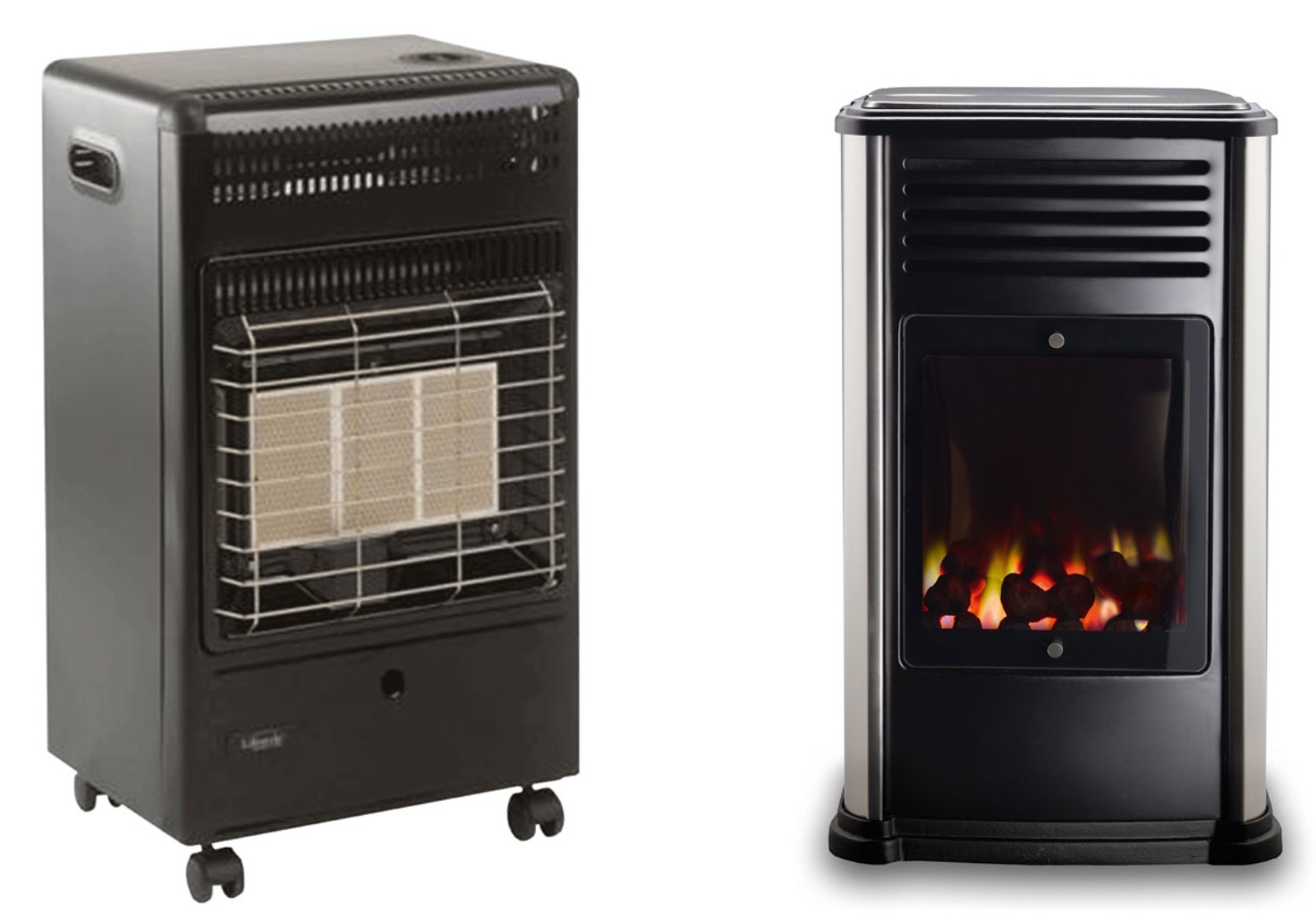
Calor gas heaters offer a great alternative to on-grid heating methods for use during emergencies. They’re also an affordable alternative to electric or oil-based heating systems, with the added benefit of portability and convenience. They can be easily transported between different locations, making them ideal for use in temporary shelters or outdoor spaces. Indeed, they’re so versatile and efficient that many households already use them as their main source of heat.

There is a lot of choice when it comes to gas bottle heaters, from basic models that look just like Granny’s old gas fire, to more expensive (though slightly less efficient) models that burn with a real flame, emulating a wood burning stove or open fire. 

For regular/constant use, bottle heaters usually work out a little more expensive than a piped gas supply, but on the other hand, there’s no standing charge to pay on bottled gas, so you’re not paying for the privilege of having it even when you’re not using it, such as throughout the summer months.  It all depends on your average gas usage.

Of course, in a serious long-term emergency, you might find gas bottles harder to get hold of, as national supplies run low, but in the short to medium term, they’re probably the best alternative for anyone whose home doesn’t have a chimney.

PRO’S: cost effectiveness/Effective heat output/simplicity/ no installation/ ambiance (can reproduce real fires or stoves)

CONS: Water Vapour/Ventilation/Still relies on a gas supply infrastructure for the supply of bottles/Initial cost

Biofuel stoves:

Biofuel is a fuel that is produced over a short time span from biomass, rather than by the very slow natural processes involved in the formation of fossil fuels, such as oil. Biofuel can be produced from plants or from agricultural, domestic or industrial biowaste. Biofuels are mostly used for transportation but can also be used for heating and electricity. Biofuels are regarded as a renewable energy source. However, the use of biofuel has been controversial because of the several disadvantages associated with the use of it. These include for example: the "food vs fuel" debate, biofuel production methods being sustainable or not, leading to deforestation and loss of biodiversity or not.

Bioethanol heaters, with their clean-burning properties, offer a convenient heating solution that can be utilized indoors without the need for ventilation or chimney installation. This flexibility makes alternative heating methods accessible to a wide range of households, regardless of their location or housing infrastructure.

Bioethanol heaters, while initially more expensive to purchase, offer long-term savings through reduced fuel consumption and maintenance costs. Bioethanol fuel is derived from renewable sources such as sugarcane or corn, making it a sustainable and cost-effective option for environmentally conscious homeowners. Additionally, bioethanol heaters require minimal installation and upkeep, eliminating the need for chimney cleaning or ventilation systems associated with traditional wood-burning stoves.

Bioethanol heaters offer another eco-friendly heating option, as bioethanol fuel is derived from plant-based sources that absorb carbon dioxide during growth, effectively offsetting emissions produced during combustion. Unlike fossil fuels, which  can release harmful gases, bioethanol burns cleanly, with minimal impact on air quality and indoor environments. 

PRO’S: Ambiance (real flames)/Clean Burning and environmentally friendly/ No installation required/ Fuel that can be produced domestically and requires no imports/

CONS: Low heat output/ Higher running costs/ Limited fuel reservoirs/Safety considerations

Paraffin or Kerosene Heaters: 

For many people, the heating of last resort would be the paraffin heater. These things were very common when I was very young, during the shortages and power cuts in the 1970’s, and kept us warm very effectively.

They do have downsides, however. They give off a lot of odour, and worse still, carbon monoxide fumes. You definitely need good ventilation if you’re relying on one of these.

Having said that, they are a cheap and simple source of emergency heating (which is why they were so popular, back in the day). Another upside is that fuel can be domestically produced, lessening the need to rely on imports in the event of a larger scale or Global disaster.

PRO’S: Cost effective/ Simplicity/ No installation/ portable and convenient/ Efficient long term heat production.

CONS: Safety considerations e.g. carbon monoxide/Odour/Regular maintenance/ Limited size of room that can be heated efficiently

Conclusion

The benefits of being able to heat one's home with wood-burning stoves, calor gas heaters, bioethanol, or kerosene heaters in the event of power grid and mains gas supply interruptions are many. From resilience and reliability to energy independence, versatility, and cost-effectiveness, these alternative heating sources offer a lifeline during times of crisis while promoting sustainability and self-sufficiency in everyday living. As uncertainties surrounding traditional utilities continue, investing in these heating solutions is a prudent method of safeguarding your household against unforeseen disruptions. By embracing alternative heating methods, homeowners can weather emergencies with confidence.


Sunday, 26 May 2024

Glow Sticks / Raver Sticks Review


We have been using these for years when out camping.  We had some NATO ones but can’t seem to find those at the moment.


We find these work for about 2 nights, giving off a glow which means it is dark enough to sleep but you can still see what is what if needs be.

Also useful for power cuts, and maybe keeping some in the ‘bug out bag / car too.  

My children also loved them when we camped and they became a hit with other children too.  The cheaper ones (which are thinner and you can make necklaces / bracelets) are also great to occupy them and it’s all magical and hopefully memories made along the way.


If you are of a certain age you could have a reminisce of the 90s… raves, decent dance tunes and dancing the night away 🤭🥳🥳🥳


Tuesday, 5 December 2023

UK Government Recognises Need for Self Reliance

 Greetings Noggers.

The UK Government have finally recognised the importance of having plans in place for the event of power cuts; exactly the kind of advice that we at Nearly Off Grid have been giving since we started.

Deputy Prime Minister Oliver Dowden has been widely reported today to have made the statement whilst visiting DSTL* at Porton Down, in Wiltshire. (*Defence Science and Technology Laboratories).


Speaking during the visit, he said it was the Government’s duty to review individuals’ resilience in the event of a disaster that could knock out our communications and other systems.

Mr Dowden suggested that households should keep a battery powered radio, a torch and candles to hand in the event of a cyber attack, or any other incident which could causedisruption to the National Grid.

He has further announced that the Government would launch a ‘resilience website’ next year that will explain to the UK’s 28 million households what they might need to do to cope with a catastrophe, and what they could do to help others who may be more vulnerable.

Hopefully, all parties in the House of Commons will fully support this idea, so that the public can access useful and practical advice, no matter which party is in Government when the project goes live.

This development is obviously to be welcomed, as such preparedness to cope will not only benefit individual households, but the nation as a whole. A populace that is able to keep calm and carry on, will be better able to keep the country working.

Here at Nearly Off Grid, we would heartily recommend keeping eyes and ears open for the new website and any further developments. In the meantime, of course, you can always find simple and practical advice on surviving disruption to the grid on this website, along with those listed on our USEFUL LINKS page.

You can also check out our article on simple ways to cope with power outages HERE


In the often dangerous and unstable world we find ourselves, there is no doubt that we will be stronger and better able to survive and thrive as a nation of NOGGERS.

Tuesday, 22 August 2023

Charge Your Phone For Free with the Elzle Solar Charger


A very handy piece of kit for travelling, camping, or when the grid goes down..


Hey up NOGGERS:

You don’t need to be totally off grid to use natures freebies.  Here’s one of our favourites.

The Solar Charger 26800mAh, Solar Power Bank with 4 Solar Panels, Flashlight, Dual 5V/2.1A USB Ports External Battery Compatible with Smartphones, Tablets etc./When you wake up to a  beautiful sunrise, open your curtains, open this little gem out and leave on the window sill all day.

After sunset, fold it back up, plug your phone into it via the usb.

When you wake on the ‘next’ sunrise; your phone is be charged, albeit not fully but it lasts me all day.  It most certainly feels good to know that you’ve used nature for one of today’s luxuries.

It also has a built-in super bright LED emergency lights with 3 modes(Steady-SOS-Strobe), SOS flashlight is designed for Outdoor Enthusiasts. Especially for go to outdoor activities.

However, it is a bit on the heavy side and I’m sure lighter can be found.

Built to last; Waterproof dustproof and shock-resistant, ideal for outside use. Long lifespan with more than 500 recharging times - time will tell.  I’ll use this daily so can get a good idea on how it performs./Would I recommend this?...Yep!


Sunday, 23 July 2023

Simple Ways to Cope with Power Outages


What is ‘Nearly Off Grid’ living?

I’m sure that many of us would like the freedom of living off the grid, and of being energy self-sufficient. Sadly, most of us don’t have the money, (or even the inclination), to go and live on an uninhabited island, or a cabin deep in the woods. And let’s face it; most of us do quite enjoy many of the benefits of the modern, connected world.

Of course, there are downsides to modern living too: the hectic pace of life,  and the many stresses and frustrations that everyday existence brings with it can often leave us feeling exhausted, lost, worried, and even depressed.

Adopting a ‘Nearly Off Grid’ approach to life can, at least, give you some respite from these stresses and allow you to relax and take time out to appreciate the benefits of a simpler lifestyle, without having to totally give up the benefits and ease that modern technology can bring.

Coping with little disasters.

Another benefit to a Nearly Off Grid lifestyle is that you will be more prepared for disasters, large or small, that can adversely affect daily life: Power supplies (electricity and gas), water, and communications networks can be put out of action by various events; anything from relatively short power cuts due to faults, industrial action, or shortages; through natural disasters; to cyber-attacks, and even all-out war.

Whilst a totally self-sufficient person/household may be able to ride out most of these events without even noticing any disruption, most people today would be lost and totally at the mercy of whatever contingency plans are eventually put in place by the state/government.

The ‘Nearly Off Gridder,’ (or, ‘NOGGER’, as we like to call ourselves here), on the other hand, will be in a much better position than most to adapt to the hardships and inconveniences that may result from such occurrences.

But how do we prepare for such disruption? What can we do when the power goes off? Do we have to be full-on prepper/survivalists to get through? Of course not. There are many simple things that we can do in order to be more prepared, no matter what kind of dwelling we live in, or what previous experience we have.

Firstly, let’s assume that you don’t have the financial security necessary to disaster-proof your home in a single shopping trip. We’ll go through items bit by bit and gradually build a set-up that will help you to be more prepared.

We’ll also start by being ready for short-term power outages, which are by far the most likely events, and then gradually start to build up to preparedness for massive, long-term disasters, which are much less likely to occur at the moment, but are still becoming increasingly possible.

The Essentials.

Let’s start then with the fundamentals. Whether you’re a hard-core survivalist or the average person, the essentials remain the same:

SHELTER

LIGHT

HEAT

FOOD AND DRINK (AND THE MEANS TO PREPARE IT)

MORALE

With the simplest of planning, we can ensure that we have the essentials in place, at least for long enough to provide for short-term disruption to services.

Practising the use, management and production of these essentials will not only serve to prepare you for disruptive events, it can also become the basis for a rewarding and interesting hobby and lifestyle.

A Short-term power outage.

Short-term power cuts were fairly common and regular in the areas where I lived during the 1970’s, 1980’s, and 1990’s, though, thankfully, they have become considerably less common in the twenty-first century. The most common causes of such outages, historically, have been: Industrial action, faults, or essential improvement work being carried out on the power supply network.

All of these causes could still occur today, even though they seem to be less common now. There is also the added possibility of deliberate sabotage (either through physical damage, or cyber-attacks intended to disrupt the nation’s infrastructure). Although such disruption may seem quite unlikely at the moment, the rise in political extremism (from all extremes), and International rivalries, make the possibility of such attacks much more of a possibility than they were only a few years ago.

However, Utilities Companies do take precautions against all of these possibilities and, generally, have robust contingency plans in place. Where power outages can be foreseen, they also have protocols in place to keep the public informed in order to minimise any disruption and allow households to make their own preparations.

THERE ARE WEBSITES THAT YOU CAN VISIT TO KEEP YOURSELF UPDATED AND INFORMED:

https://www.sseenergysolutions.co.uk/preparing-for-power-cuts

https://www.ukpowernetworks.co.uk/power-cut/list

https://www.nationalgrid.co.uk/power-cut-information

https://www.gov.uk/government/publications/electricity-supply-emergency-code

As I stated earlier, this is the most likely kind of problem with the grid that we are likely to experience at the moment, and fortunately, there are many simple preparations that you can make for very little cash outlay.

Such a power cut is usually little more than a minor inconvenience, especially for those who live in a dwelling heated by an open fire or log-burning/multi-fuel stove, and who have a couple of candles stored away. Of course, for most of us, the level of inconvenience grows exponentially with each additional hour that the grid is down.

Let’s have a quick look at the bare essentials that you could have in place at very little cost, that will fully prepare you for a power outage of up to twenty-four hours. Remember: These are the very basic preparations that you can make:

Shelter:

I am going to assume here that you live in a dwelling of some sort. If you live in a house with open fires or woodburning stoves, you are already much more prepared than most. However, let’s look at a situation where you are much more vulnerable to disruption. You may well live in a modern flat or bedsit/studio apartment with mains electricity as your only source of power, heating and cooking.

Light:

The bare minimum preparation that you can make for a short-term power outage is to have a torch, a few candles, and a lighter or matches. Fortunately, these items are very cheap, and you can easily have a stock that will last you a few nights, all from your local pound(or dollar) store.

There may be a temptation here for some of you to skip buying a torch. “After all,” you may say, “my phone has a built in torch, so why spend money on a battery, or wind up torch?” Yes, it probably does, but the torch in your phone is a relatively large drain on the battery – much more so than most of the other apps on there. Unless you have a sure-fire way of charging your phone that doesn’t rely on the grid, you’re much better off saving your battery power in case of emergencies.

After all, your phone is your life line in the case of a serious emergency. This is why it’s also a good idea to always keep your phone fully charged whenever you can, and don’t leave apps running in the background when you’re not using them. You’ll be surprised at how much battery life you can save with good device management habits.

So, a simple, cheap torch and a couple of spare batteries, stored somewhere that’s easy to reach, even in pitch darkness, is a must. A few candles or tealights is also essential. Tealights are probably better as they are the safer option in the home than traditional candles. Their short, squat shape makes them much less prone to being knocked over.

If you have small children in your household, of course, you need to be especially careful with candles of any sort. It goes without saying that they should not be left unattended in these situations.

Also; if you do have children, it might be a good idea to include them in practice drills so that they know what to do in the event of a power outage. The more fun you make it, the quicker they will learn. Your own attitude toward preparing for a power cut will make all the difference to their reactions. I remember that, as a child, my own attitude towards power cuts was they were an exciting little adventure.

Heat/Warmth:

In the event of a power outage in cold weather, this can either be the easiest or the hardest essential to provide, depending on your home. For those who currently heat their homes with open fires, nothing at all will change with regards to heating in the event of a power outage.

If your home has a gas fire (and only the electrical grid is down), you’re fine. If you live in a home where the heating is electric (or even with a gas central heating system that relies on electric pumps to move the hot water around the system), you could find yourself getting cold very quickly.

There are alternative ways to keep warm and some are better than others. We will look at various methods of heating a home, and their pros and cons, at a later date. For now, however, we are concentrating on the basics, and on getting started on the road to preparedness.

Therefore, as part of your initial preparations for power outages, you should have a set of warm, comfortable clothes and a few blankets that you can resort to in the event of a winter power cut. You may also wish to consider a good quality, old-fashioned hot water bottle. They’re relatively cheap, even for a good quality one, and could even be a life-saver, (especially for the elderly or vulnerable).It’s also a very good idea to consider investing in, (or making), a fabric cover for the hot water bottle to minimise the risk of scalding or burning the skin through direct contact with the hot rubber of the bottle.


Food and drink (and preparing it).

Even if the grid is only down for a short period of time, you’re still going to have to eat. Remember; if the power is down at home, it may well be down at your local takeaway. Of course, in the very short term, you may feel that you can make do with snacks or a sandwich, but on a cold winter’s night, you will undoubtedly benefit from having a hot meal in your belly, and at some point, you’re going to want something a little more substantial.

We’ll start again with the absolute basics. It is always worth having in stock some basic foodstuffs in tins (along with a tin-opener, of course). Most tinned foods will last for years whilst unopened, and can provide all the nutrients that you need in the short term. Ideally, you should have a few tinned items stored away that can be eaten hot or cold; cooked meats, tinned potatoes and vegetables, and even tinned fruit can still be picked up very cheaply. You can also rely on dehydrated camping meals and such like to provide a ready made feast. 


If you live in a home that uses electricity for cooking, you’re going to need an alternative that is inexpensive and easy to store away. Anyone that has a set of camping equipment is, of course, already prepared. Anyone that doesn’t should think about buying a camping stove at their earliest opportunity. Even if you’re adamant that you can get by on cold food in the depths of winter, you will still want a method of boiling water, either for making hot drinks, filling hot water bottles, or even  for washing.

There are countless different cooking stoves using a variety of fuels and, in future, we’ll be reviewing a large selection. For a person in a house or flat, who is going to be cooking indoors, however, the choice is simple: a small camping stove that runs off compact gas cannisters is by far, the best piece of kit to start with.

Fortunately, there is a wide variety of very serviceable stoves of this type available without having to spend too much money. For a flat or a small house, I would recommend a simple, one-burner stove that uses the small gas cannisters which are about the same size as an average aerosol can.

This kind of stove can be placed on a kitchen worktop and, due to its shape, is very sturdy and is unlikely to topple over, thereby making it much safer to use in the home than many of the other designs of camping stoves.

Also, the actual cooking ring on this type of stove is about the same size as the rings on an ordinary domestic gas cooker, meaning that you should have no problems using your ordinary pots and pans to cook on it. You may want to indulge in the luxury of a kettle for boiling water for drinks, but obviously, a pan with a lid will do the job.

Of all the items listed so far to cover your basic needs in a power cut, this is the most expensive, but as you will find from a quick online check, it is still not prohibitive in cost, especially for such a useful item.


Morale.

The last of our essentials to get you through a power cut is one that most people overlook, or simply don’t consider as essential. Of course, the level of necessity here will depend on individual circumstances. If you live in a household with other people and you all get on well and enjoy talking, this may be all the morale boost that you need. If, on the other hand, you live alone and don’t have much contact with your neighbours, you could quickly find yourself becoming bored, isolated, anxious and subject to negative thoughts.

There are many things that you can have stored away to boost your morale and keep your mind occupied during a power outage on a cold winter’s night:

A transistor radio. Small battery powered radios can be picked up very cheaply these days, if you don’t have one already (as with the torch, don’t rely on your phone’s built in radio. Save your battery life). The batteries in a cheap, hand held radio will last much longer than your phone battery, and you can always keep a couple of spares, just in case.

There are also many variations when it comes to radios, such as wind-up radios, solar power powered, etc. You could even build yourself a crystal set, if you’re so inclined, as another way of dispensing with the need for batteries altogether, but if you’re just starting out, a cheap battery operated radio will be just fine for keeping you entertained and, (if necessary), informed.

You might also want to consider keeping aside some books or magazines, notebooks and pens, or chess sets, playing cards and board games to keep your mind occupied and stop you going stir-crazy whilst the power is down.

So, that’s the very basic essentials that will get you through a short-term power outage, the most likely type of disruption to the grid that is likely to occur at this time. The chances are that the lights will be back on in a few short hours anyway, but if you’ve taken these simple precautions, you have already taken the first step to being a ‘nearly off gridder’, and you’ll be much better prepared than most to handle longer and more serious disruptions.


Remember: When hardship comes knocking, you’re either a N😊GGER, or you’re NT!